Table of Contents
- Why Morning Hiking in Palm Desert Beats an Afternoon Start
- Best Hiking Trails in Palm Desert for a Sunrise Start
- Desert Hiking Safety Tips for Dawn Starts
- Hiking Gear for Desert Climates: What to Carry at Dawn
- Trail Etiquette at Popular Sunrise Spots
- After the Hike: Recovery and Local Amenities
- Conclusion: Make Morning Hiking Part of Your Desert Routine
- Frequently Asked Questions
Last Updated: September 25, 2026
Why Morning Hiking in Palm Desert Beats an Afternoon Start
The benefits of early morning hiking in Palm Desert come down to one simple fact: the desert is a different place before the sun climbs over the mountains. Morning temperatures in the Coachella Valley can sit 20 to 30 degrees cooler than afternoon highs, which turns a grueling slog into a comfortable, scenic walk. This guide from the Visitor Center for Palm Desert breaks down the trails, gear, and safety habits that make a dawn start worth the alarm.
Here’s the part most people get wrong: they treat morning hiking as a scheduling preference. It isn’t. It’s a safety decision. Once the summer heat builds, exposed trails radiate warmth back at you from every direction, and your body has to work harder to cool itself. Start at sunrise and you finish before the worst of it arrives.
How Morning Temperatures Change the Whole Hike
Morning temperatures in the desert landscape often start in the comfortable range and climb steadily once the sun clears the ridgeline. That window matters more than any other variable on the trail.
- Lower heart rate: Your cardiovascular system isn’t fighting heat stress on top of elevation gain
- Less sweat loss: You lose less fluid, so hydration goes further
- Better footing: Cooler ground means less fatigue in your legs and ankles
- Clearer air: Morning stillness keeps dust and haze down
Many hikers find they can cover noticeably more ground in the same effort level before 9 a.m. than they can at midday. That’s not motivation talking. It’s physiology.
The Cardio Workout You Get Before Breakfast
Morning hiking doubles as an outdoor gym session. A steady climb on uneven terrain raises your heart rate and builds stamina in a way a treadmill rarely matches. The desert adds resistance: sand, loose rock, and constant small adjustments to your balance.
What most guides miss is that the cardio benefit compounds with consistency. A 45-minute sunrise hike three times a week builds endurance faster than one long weekend effort, because your body adapts to repeated, moderate stress. Treat the trailhead as your gym and the sunrise as your warm-up.
Best Hiking Trails in Palm Desert for a Sunrise Start
The best hiking trails in Palm Desert for a sunrise start range from flat, accessible paths to steep climbs with serious elevation gain. The right choice depends on your fitness level, how much time you have, and how early you’re willing to rise. What follows is organized by effort level, with the terrain and timing details that actually decide whether a dawn start works.
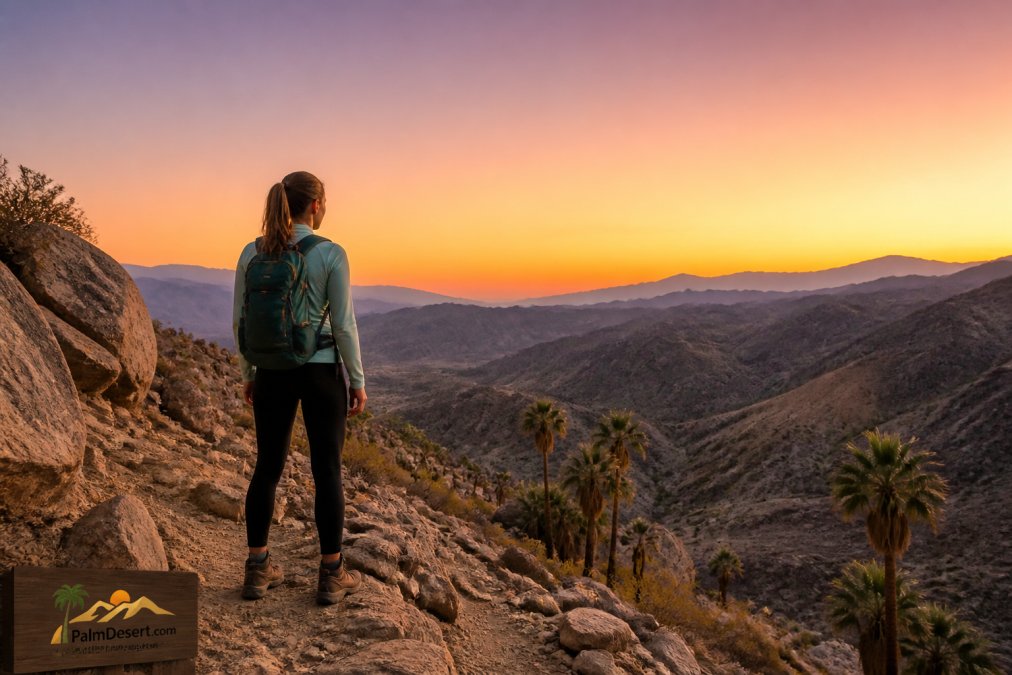
Rising temperatures quickly follow the dawn, making it essential to wear moisture wicking hiking shirts to maintain comfort as the desert heat intensifies.
Short Routes for Beginners and Early Risers
Short routes suit anyone easing into morning hiking or squeezing in a workout before work. Look for accessible paths with minimal elevation gain and clear, well-marked trailheads.
- Paved and gravel paths for strollers and casual walkers
- Loop trails under 2 miles that return you to your car quickly
- Wide, shaded sections where you can find relief as the sun rises
These routes deliver spectacular views without demanding peak fitness.
Trails With Real Elevation Gain for Stronger Hikers
Stronger hikers should target trails with genuine elevation gain and exposed terrain. These routes reward you with breathtaking mountains and panoramic scenic vistas, but they demand respect.
- Switchback climbs trade distance for grade. The trail zigzags up a ridge instead of going straight, so the effort per step stays moderate even as you gain height. Good for hikers building stamina.
- Wash and sand sections eat energy quietly. Loose sand forces your calves and ankles to work harder for the same forward progress, so a mile of wash can feel like two miles of packed trail.
- Rock scrambles near the top of many ridge routes require hands on rock. If you’re not comfortable using your hands, turn around before the scramble starts rather than pushing through.
On steep desert climbs, shorten your stride and lean slightly forward on the ascent. Most hikers burn out early by taking long steps that spike their heart rate on the first switchback.
Timing Your Start to the Season
The right start time shifts dramatically across the year, and treating “early morning” as a fixed clock time is the most common planning error.
Book Hotels with Exclusive Discounted Rates Now →
- Late spring through early fall: Aim to be on the trail before first light so you’re descending as the sun clears the ridgeline. A headlamp isn’t optional in these months.
- Late fall through winter: Overnight temperatures can drop enough that you’ll want a warm layer at the start and a place to stash it once you warm up. Sunrise itself is often the coldest part of the hike, not the warmest.
- Shoulder weeks: These are the sweet spot. You can start at first light, finish comfortably, and still have the rest of the morning free.
Desert Hiking Safety Tips for Dawn Starts
Desert hiking safety tips matter most in the hour before sunrise, when light is low and temperatures are still dropping. A little preparation keeps a beautiful morning from turning into a rescue call.
| Risk | Why It Happens at Dawn | How to Prevent It |
|---|---|---|
| Dehydration | Cool air masks fluid loss | Drink before you feel thirsty |
| Low visibility | Sun hasn’t risen yet | Carry a headlamp |
| Wrong turn | Faint trail markers | Study the route in advance |
| Cold start | Overnight temps drop | Layer up, then shed |
Hydration and Electrolytes Before the Heat Builds
Hydration for a desert morning hike starts the night before. Drink steadily through the evening, then take 16 to 20 ounces in the hour before you leave. Waiting until you’re thirsty is too late.
Drinking large amounts of plain water without electrolytes during a long, sweaty hike can dilute your sodium levels and cause headaches, nausea, and cramping. Balance fluid with salt intake on any effort over 90 minutes.
Wildlife Awareness on Exposed Trails
Wildlife awareness is the safety topic most hikers skip, and it’s the one that surprises people. Desert animals are most active in the cool morning hours, which is exactly when you’re on the trail.
- Give snakes space. They warm up on rocks and paths at dawn
- Watch for coyotes and rabbits near brush and washes
- Never reach into crevices or under ledges without looking first
- Keep food sealed to avoid attracting animals
Hiking Gear for Desert Climates: What to Carry at Dawn
Hiking gear for desert climates should solve three problems: sun, heat, and water. Everything else is optional.
- Headlamp or small flashlight for the pre-dawn start
- Wide-brim hat and sunglasses for when the sun clears the ridge
- Light, breathable layers you can remove as temperatures rise
- At least one liter of water per hour of hiking
- Electrolyte mix for longer routes
- Sunscreen applied before you leave, not on the trail
- Fully charged phone with an offline map downloaded
Trail Etiquette at Popular Sunrise Spots
Trail etiquette at popular sunrise spots keeps a shared experience enjoyable for everyone. Dawn draws crowds to the best viewpoints, and small courtesies go a long way.
- Yield to uphill hikers so they keep their rhythm
- Step aside for faster walkers rather than blocking the path
- Keep voices low at overlooks where people are watching the sunrise
- Pack out everything, including fruit peels and wrappers
- Park considerately and don’t block trailhead access
After the Hike: Recovery and Local Amenities
Recovery starts the moment you finish. Rehydrate, eat something with protein and salt, and stretch your calves and hips while your muscles are still warm. A short walk to cool down beats collapsing into the car.
The best recovery routine is boring and consistent: water, electrolytes, protein, and rest. Fancy recovery gadgets can’t outwork the basics after a desert morning on your feet.
Conclusion: Make Morning Hiking Part of Your Desert Routine
The hardest part of morning hiking is the first alarm. Once you’re on the trail with cool air and quiet, the payoff is obvious. Build the habit gradually, respect the heat, and let the sunrise do the rest.
Frequently Asked Questions
How does morning hiking in Palm Desert help avoid desert heat?
Morning temperatures in the Coachella Valley are at their lowest right before and just after sunrise, often 20 to 30 degrees cooler than midday. Starting early means you finish most of your route before the summer heat peaks, which lowers your risk of heat exhaustion and lets you push harder on climbs. Aim to be on the trailhead at first light and off exposed trails by mid-morning.
What are the best hiking trails in Palm Desert for an early start?
Look for trails with easy trailhead access and clear, accessible paths so you are not route-finding in low light. Short routes with modest elevation gain suit beginners and families, while steeper canyon climbs give stronger hikers a real cardio workout. Pick a trail you have researched in advance, check current conditions, and confirm sunrise timing for the season before you go.
What should I pack for a sunrise hike in the Coachella Valley?
Carry more water than you think you need, plus electrolytes for anything over an hour. Bring a headlamp or phone light for the first stretch, a light layer for cool morning temperatures, sun protection for the return leg, and sturdy shoes for loose, rocky terrain. A small first-aid kit and a charged phone round out the basics for desert hiking safety.
Are there safety tips for hiking alone in the desert at dawn?
Tell someone your route and expected return time, and stick to marked trails rather than exploring side paths in low light. Watch for wildlife like snakes and coyotes, which are more active around dawn and dusk, and give them space. Turn back if you feel unwell, and remember that hydration and electrolytes matter more than pace when you are hiking solo.