
Your guide to Fountain Valley

Your guide to Fountain Valley

Best Time to Visit Anaheim
Your guide to Fountain Valley

What is The Best Time to Visit Anaheim, CA, US?

What Is the Best Time to Visit Anaheim, CA? Table of Contents Introduction Seasonal Breakdown: When to Go Summer (June – August): Peak Energy & Peak Crowds Fall (September – November): The Insider’s Season Winter (December – February): Budget & Holiday Magic At-a-Glance Planning GuidePractical Travel Tips & Logistics Conclusion Ask ten people when to go to Anaheim and you’ll get ten answers, mostly because they’re picturing ten different trips. The parent who has to plan around the school calendar and the couple chasing a quiet January weekday at Disneyland are both right. So is the baseball fan who wants an October night at Angel Stadium, and the conference-goer who would rather be in Orange County in February than most other places. That’s the thing about Anaheim. It’s one of the most visited cities in California, and the reason to go shifts with the season. Disneyland Resort has been the anchor since 1955, but the city also has a major convention center, the Honda Center, and the Angels’ home field, all of it a short drive from beaches that stay warm well past summer. The weather is mild almost year-round, with winter afternoons in the mid-60s°F and August highs in the mid-80s°F. That means “bad weather” rarely decides the question. Crowds, prices, and what’s on the calendar do. Those three factors are what this guide uses to sort the year. Below, I’ll walk through each season, flag the weeks to avoid and the ones worth building a trip around, and help you match the right month to the kind of visit you have in mind. Seasonal Breakdown: When to Go A. Spring (March to May): The Prime Window If one season deserves the title of best time to visit Anaheim, it’s spring. Afternoon highs sit around 76°F, rain is mostly behind you by March, and the long, hot stretch of summer hasn’t arrived yet. You can spend a full day in the parks without planning around heat. One small thing to pack for: May often brings a gray, cool marine layer in the morning that burns off by midday, so bring a light layer for early starts. Key events Boysenberry Festival at Knott’s Berry Farm. The park is in nearby Buena Park, about ten minutes from Anaheim, and it celebrates the berry that was popularized there. Expect boysenberry pies, jams, and an unreasonable number of boysenberry-flavored snacks. It typically runs through the spring months. Disney California Adventure Food & Wine Festival. This one usually opens in early March and runs into spring. Marketplace booths around the park serve small plates and tastings, and it’s a good reason to graze your way through the day instead of queuing for a single sit-down meal. Crowds and tips Spring crowds stay below the summer peak, but they aren’t uniform. Spring break and the Easter holiday week send attendance up sharply, so check the Easter date and your local school districts’ break schedules before you lock in dates. Outside those windows, early April tends to offer shorter waits than May. If you can swing a Tuesday through Thursday visit, you’ll get the most out of a season that’s already one of the best. B. Summer (June to August): Peak Energy and Peak Crowds Summer is Anaheim at full volume. It’s the warmest stretch of the year, with highs averaging 85°F or more and climbing to around 92°F by late August. Rain is close to nonexistent, so the forecast won’t wreck your plans, though the afternoon sun on asphalt can. Plan on sunscreen, a refillable water bottle, and a hat, and treat the midday hours as the time to be indoors: a ride with a long, air-conditioned queue, a show, or a sit-down lunch. Key events Longer park hours. This is the season when the Disneyland Resort parks typically stay open latest, which gives you room to rest at the hotel pool in the afternoon and return for the evening, when temperatures drop and the lights come on. Fireworks. Nighttime spectaculars run more regularly in summer, and the Fourth of July week is the biggest draw of all (and the most crowded). Knott’s Summer Nights. Over in Buena Park, Knott’s stays open into the evening with live entertainment and a cooler, livelier atmosphere than the daytime crowd. Ghost Town Alive. Knott’s Old West section comes to life with staged shootouts, stunts, and costumed characters, which is a fun break from the thrill rides. Crowds and tips This is the busiest season of the year, and hotel rates reflect it. Families are free of school schedules, so lines are long and weekends are the heaviest of all. If summer is your only option, a few choices help. Weekdays in June usually beat July and August, since many schools in the region are still wrapping up, and late August is another softer spot as local school calendars start again. Book your hotel early, arrive at rope drop, and save the midday hours for shade and rest. C. Fall (September to November): The Insider’s Season Locals tend to point visitors to fall, and the reasons are practical. The weather is still warm but the evenings cool off, and the summer crowds are gone. Weather Highs average around 83°F, with evenings cooling into the 50s and low 60s. September can still run hot, and November is the mildest month of the three. Key events Halloween at the parks. Disney California Adventure hosts the ticketed Oogie Boogie Bash, and Knott’s Scary Farm in nearby Buena Park runs its haunted mazes and scare zones after dark. Both are separate tickets from regular admission, and popular nights sell out. Anaheim Fall Festival and Halloween Parade. The parade dates to 1924, when Babe Ruth served as grand marshal, and it was revived in 2012. The festival fills downtown’s Center Street Promenade through the day with food vendors, artist booths, and costume contests for kids and dogs. The parade steps off at 7 p.m. It’s held on a Saturday in late October, so […]

Family friendly korean restaurants
Your guide to Fountain Valley

Family Friendly Korean Restaurants Compared: 2026 Guide

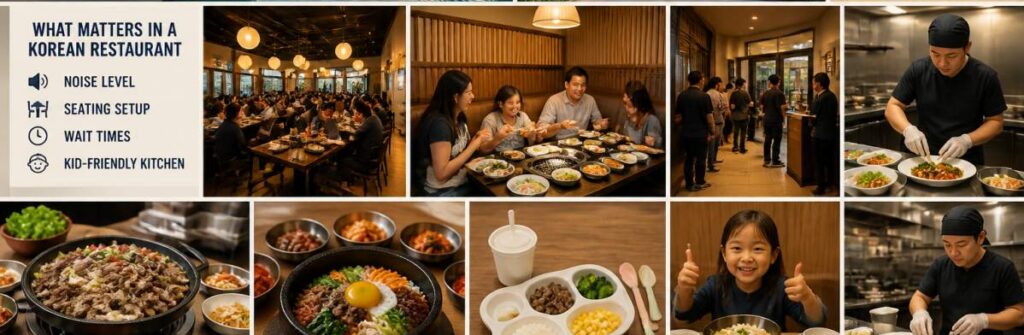
How to Compare Family Friendly Korean Restaurants Comparing family friendly Korean restaurants comes down to four things: noise level, seating setup, wait times, and how the kitchen handles kids. Get those right and dinner works. Get them wrong and you’re eating cold bulgogi in the car. This guide breaks down what actually matters, dish by dish and table by table. Korean food is one of the great family cuisines. Most of it arrives at the table already divided into small portions, which suits children who refuse to commit to a full plate. The catch is that most Korean restaurants were not designed with strollers, booster seats, or a four-year-old’s spice tolerance in mind. That’s the tension running through this whole guide: Korean dining is built for groups, but not necessarily for small people. Below, we’ll show you exactly how to read a restaurant before you commit, which dishes reliably land with picky eaters, and how to handle allergies, accessibility, and budget without turning dinner into a project. Key Factors: Noise Level, Seating, and Wait Times Noise level, seating, and wait times decide whether a Korean restaurant works for your family far more than the food does. A restaurant can serve the best jjajangmyun in the area and still be unusable at 6 p.m. on a Saturday with a toddler. Here’s what to check before you go: Factor What to Look For Why It Matters Noise level Busy, chatty rooms beat quiet ones Kids can be loud without stares Seating Booths, high chairs, floor tables Booths contain spills and wiggles Wait times Off-peak arrival, call-ahead Hungry kids do not queue well Table type Built-in grill vs. standard Grills need constant adult attention Banchan pace Refills offered freely Free refills keep kids busy A common mistake is booking the trendiest spot in town. Loud, packed rooms are actually better for families than hushed ones, because nobody notices a dropped spoon. What most guides miss is that a restaurant with a waitlist and no lobby seating is a harder sell than one with a slightly duller menu and immediate tables. Pro TipCall ahead and ask two specific questions: “Do you have high chairs?” and “Can we be seated away from the grill tables?” The second one matters more than most parents expect. Kid Friendly Korean BBQ: What Parents Need to Know Kid friendly Korean BBQ works well for families once you understand one rule: the grill belongs to an adult, always. Children eat the banchan, the rice, and the pre-grilled meat. They do not reach across a hot surface, and they do not sit on the aisle side of it. The communal dining format is the real draw. Everyone shares, everyone reaches, and nobody has to finish a plate they didn’t choose. For picky eaters, that’s a gift: they can try one bite of five things instead of committing to one. Grill Safety and Communal Dining with Children Grill safety comes down to seating position and supervision, not avoidance. Ask for the child to sit on the inside of the booth, away from the grill edge and away from the walking path where servers carry hot plates. Order grilled items early. Bulgogi and other marinated meat cook fast, and once the meat is off the grill, you can switch the heat down or off entirely and relax. Marinated meat also tends to be soy-based and savory rather than spicy, which makes it one of the safest bets for kids at a Korean BBQ table. Watch OutDo not let a child sit at the grill-side edge of the table, even for a moment. Servers move fast with hot pans, and a reaching arm near a built-in grill is the single most common way a fun dinner ends early. Mild Korean Dishes for Toddlers and Picky Eaters Mild Korean dishes for toddlers center on steamed, egg-based, and soy-sauce preparations rather than anything built on chili paste. Gyeran-jim, a steamed egg dish, is soft, savory, and almost universally accepted by small children. Kimbap, rice and fillings rolled in seaweed, works like a sandwich and travels well. Here are the dishes that consistently land with kids: Gyeran-jim – steamed egg, soft texture, no spice Kimbap – rice rolls, easy to hold, mild fillings Bulgogi – marinated meat, sweet-savory, not hot Jjajangmyun – black bean noodles, mild and slightly sweet Tang-su-yuk – sweet and sour pork, a reliable crowd-pleaser Steamed rice and plain banchan – the fallback that always works The dishes to approach carefully are anything described as kimchi-based, anything with gochujang in the name, and anything labeled spicy on the menu. Spice level in Korean cooking is adjustable at some restaurants and fixed at others, so ask before you order rather than after. Key TakeawayIf your child eats only one thing all night, make it gyeran-jim or kimbap. Both are mild, filling, and available at nearly every Korean restaurant. Korean Restaurant Dining Tips for Parents Korean restaurant dining tips for parents start with timing. Arrive before the rush, order within the first five minutes, and ask for rice and a mild banchan to hit the table immediately. A child with something to eat is a child who waits patiently for the rest. Chopstick training is worth starting at the table rather than at home. Most Korean restaurants will bring a fork or spoon without hesitation, so there’s no reason to force chopsticks before your child is ready. Let them try, keep the backup utensil nearby, and don’t make it a test. Ordering Without a Kids’ Menu Most Korean restaurants don’t print a kids’ menu, and that’s not a problem once you know how to order. You’re building a child’s plate out of the regular menu, and the regular menu is unusually well suited to it. Order this way: One mild protein, such as bulgogi or tang-su-yuk One noodle or rice dish, such as jjajangmyun or kimbap One steamed dish, such as gyeran-jim Rice for the table A banchan or two you know your child will […]

Fountainvally
Your guide to Fountain Valley

Affordable Family Hotels Near Disneyland: 2026 Guide

How to Compare Affordable Family Hotels Near Disneyland The biggest mistake families make when hunting for affordable family hotels near Disneyland is comparing the nightly rate instead of the total bill. This guide from Fountain Valley walks through what actually drives your cost, which properties sit within walking distance of the park entrance, and how to spot the fees that turn a cheap-looking listing into an expensive stay. A hotel that advertises a low base rate but charges for parking, breakfast, and a resort fee can cost more than a property with a higher headline number. That single insight reshapes how you should shop. Below, we break down the total cost-of-stay method, the room layouts that actually fit four to six people, and the booking timing that saves the most. The Federal Trade Commission’s guidance on hidden fees has pushed more hotels toward transparent pricing, but listings still bury charges in fine print. Read the fee schedule before you read the photos. The Total Cost-of-Stay Calculator Total cost of stay is the sum of nightly rate multiplied by nights, plus parking, resort fees, breakfast, and any shuttle or ride-share costs, minus the value of free amenities you would otherwise pay for. Run this number for every property before you decide. Here is the formula in plain terms: Total Cost of Stay = (Nightly Rate × Nights) + (Parking × Nights) + Resort Fees + (Meals You’d Otherwise Buy) + Transport to Park − (Value of Free Amenities) Cost Component What to Check Why It Matters Nightly rate Base price before taxes and fees The number everyone compares, and the least useful alone Overnight parking Per-night self-park or valet charge Adds up fast over a multi-night stay Resort fees Mandatory daily charge Often excluded from the advertised rate Complimentary breakfast Included or paid A real value for families of four or more Shuttle service Free, paid, or none Replaces ride-share or parking at the park Kitchenette In-room or shared Cuts food spend on longer trips A family staying four nights with a car can easily pay more in parking and fees than the difference between two room rates. Build the table once, and the decision usually makes itself. Pro TipAsk the front desk whether the resort fee covers anything you will actually use, like the pool area or WiFi. If it only covers a newspaper and a lobby coffee, treat it as pure cost when you compare. What to Ignore in Hotel Listings Star ratings and lobby photos tell you almost nothing about whether a hotel works for a family with young kids. What matters is the room layout, the walking distance to the park entrance, and whether the property has quiet hours that let everyone sleep. Skip these when you compare: Lobby grandeur, you will spend almost no time there. On-site restaurant count, families eat early and often off-property. Marketing language like “resort-style”, it has no standard definition. Photos of a single staged room, request the actual layout you will book. What most guides miss is that guest capacity and room layout matter more than square footage. A room listed at 400 square feet with two queen beds sleeps four comfortably; the same square footage with a single king and a sofa bed sleeps four badly. Walking Distance Hotels Near Disneyland Walking distance hotels near Disneyland sit roughly within a 15 to 20 minute walk of the park entrance, which removes the daily parking or shuttle cost entirely. For families, that proximity is often worth more than a slightly lower nightly rate farther out. The trade-off is real. Properties closest to the entrance tend to charge more per night, and some add resort fees. But when you fold in the saved parking and the saved time, the gap narrows more than the listing prices suggest. Consider these factors when judging proximity: True walk time, check it on a map at a normal pace, not a marketing claim. Sidewalk quality, a safe, lit route matters with a stroller at night. Crossings, count how many major intersections you cross. Return trip, a walk that feels fine at 8 a.m. feels longer after a full park day. A common mistake is booking a “walkable” hotel that is actually a 30 minute walk. That is not walkable with tired kids. It is a shuttle ride you did not budget for. Stroller Logistics and Accessibility Stroller logistics decide whether a walking-distance hotel is genuinely practical. Look for wide sidewalks, curb ramps, and a route that avoids stairs or unpaved stretches. Ask the hotel two questions before booking: Is the path to the park entrance stroller-friendly the whole way, and is there a place to park a stroller in the room without blocking the door? Accessibility features worth confirming directly: Step-free entry from the parking area to the lobby Elevator access if you are above the ground floor Roll-in showers or accessible rooms if anyone in your group needs one A route to the park that does not require carrying the stroller up stairs Family Suites Near Disneyland Family suites near Disneyland solve the single biggest problem in hotel travel with kids: everyone sleeping in one room. A suite with a separate bedroom or a bunk area lets parents stay up after the kids are down. Bunk Beds, Kitchenettes, and Room Layouts Bunk beds and kitchenettes are the two features that most change a family stay. Bunk beds settle the “who sleeps where” argument instantly, and a kitchenette cuts food spending on trips longer than two nights. Room layouts to look for: Bunk bed suites, kids get their own space, parents get a real bed. Kitchenette rooms, a small fridge, microwave, and sink cover breakfast and snacks. Two-room suites, a door between you and the kids is worth paying for. Connecting rooms, two standard rooms that open into each other. Key TakeawayThe best family room is not the biggest one. It is the one where the kids sleep in a separate space and you have […]

Scroll to Top